


Devil or Angel?

Updated: Jul 20

I knew him as Ward, the kind-hearted dad of Beaver Cleaver, long before I discovered him playing cops and gumshoes. Hugh Beaumont had an impressive B-film noir resume. He was no Humphrey Bogart, but Bogart was no Ward Cleaver. Many personalities who cut their acting teeth on the dark streets found kinder and gentler careers on the small screen. This transition required special acting versatility. As a medium beamed free into the sanctity of your living room, television answered to a higher calling and espoused “family-oriented” standards. Clean as a whistle. Mean streets and nasty dames belonged in dark downtown movie theatres that you paid to enter.
Here are some of the most notable film noir thugs, wise-guy detectives, and vixens rehabilitated by television. Once cast from the dark side, they seldom returned.
Fred McMurry was a master of the cool bad guy and the cool good guy, whose nuanced acting range could take him from a womanizing, narcissist killer to a benevolent widower dad. Try watching an episode of My Three Sons followed by Double Indemnity.
Raymond Burr was the heaviest of heavies in film noir. That hulking presence filled and subdued the room. Consider his sinister aura and nasty deeds in Raw Deal or Walk a Crooked Mile. He would go on to play the valiant Perry Mason on television for almost a decade and then morph into the equally valiant Ironsides. In a way, Burr was still a heavy but now fighting the good fight. In his last noir film, one year before Perry Mason premiered, he was suddenly cast as an honest, intrepid lawyer in Please Murder Me. Was that a warm-up for his upcoming courtroom knight roles?

William Talman is another refugee from film noir that found a home on Perry Mason as the dedicated - but always on the short end of the verdict - District Attorney Hamilton Burger. Before defending the law, he was breaking it as a common thug, master criminal, and, at his best, a crazed prison escapee in The Hitchhiker and Crashout.

Don Porter is hardly a household name. He is best-known as the gruff but lovable hotel manager who must also manage his sweet but rambunctious secretary in the television hit The Ann Sothern Show. Then as the bewildered father of another female handful - Gidget. But before leaving for the gentler pastures of television, he was typecast as a tough, suave mob boss in The Racket, 711 Ocean Drive, and The Turning Point, released in 1952. One year later, The Ann Sothern Show premiered. It was the end of his life in the shadows.

Henry Morgan specialized in offbeat noir roles, some sympathetic, but was at his best as a chilling professional killer in Appointment With Danger, a menacing enforcer in The Big Clock and then Outside The Walls, where he played a sadistic gangster whose specialized in under-the-fingernails torture. Morgan saved his soft side for the last, finishing his acting career as the lovable curmudgeon Col. Potter harnessing the MASH misfits for eight seasons. He warmed up for that role by being an annoying but admirable television cop partner to Jack Webb on Dragnet.

Here they are ten years earlier as gang members in Appointment With Danger. Unfortunately, psychopath Webb eliminates his unreliable partner moments later in this scene.
Brian Keith dabbled in mid-1950s noir, sometimes playing tough cops, sometimes a bank robber the tough cops are chasing, once a terrifying sociopath. All that was swept into the dustbin of cinematic history when he became “Uncle Bill” to raise three orphaned children of his late brother in Family Affair, which ran for five seasons.

William Bendix played some benign film noir characters but was most memorable as a sadistic thug in The Glass Key and a henchman in The Dark Corner. By the early 1950s he morphed into the lovable, goofy dad and husband in TV suburbia, living the Life of Reilly.

Who didn’t love Herbert T. Gillis, the frustrated, crabby father of Dobie and nemesis of Maynard G. Krebs in The Life of Doby Gillis? In his big screen life, Frank Fayham played tough cops and criminals in noir dramas including Blue Dahlia, Riot in Cell Block 11, and The Detective.
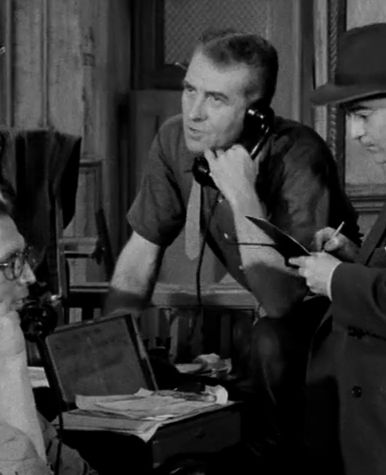
Vince Edwards went from taking lives as a hired killer in City of Fear to saving them on television as Ben Casey.
Before Lorne Greene was the standup patriarch of the Cartwright clan on Bonanza, he indulged his dark side as a ruthless mob boss inTight Spot and The Trap.
There were fewer big screen noir women who changed their evil spots on TV. The versatile Barbara Stanwyck played a cavalcade of noir characters, including a fair share of vixens and questionable dames. Dastardly Phyllis “Double Indemnity” Didrikson spent her later acting days as virtuous matriarch Victoria “Big Valley” Barkley.
Angela Lansbury, the quirky, endearing sleuth in the long running TV series, Murder, She Wrote played nasty, manipulating femme fatales in Please Murder Me and A Life at Stake.

Jane Wyatt appeared in a few noir films, usually as a sympathetic, loving soul, but her role in The Man Who Cheated Himself was cool, amoral, self-serving narcissism. It was best that Jim Anderson, the loving patriarch in the television hit Father Knows Best, never knew about that noir skeleton in his perfect wife’s closet.
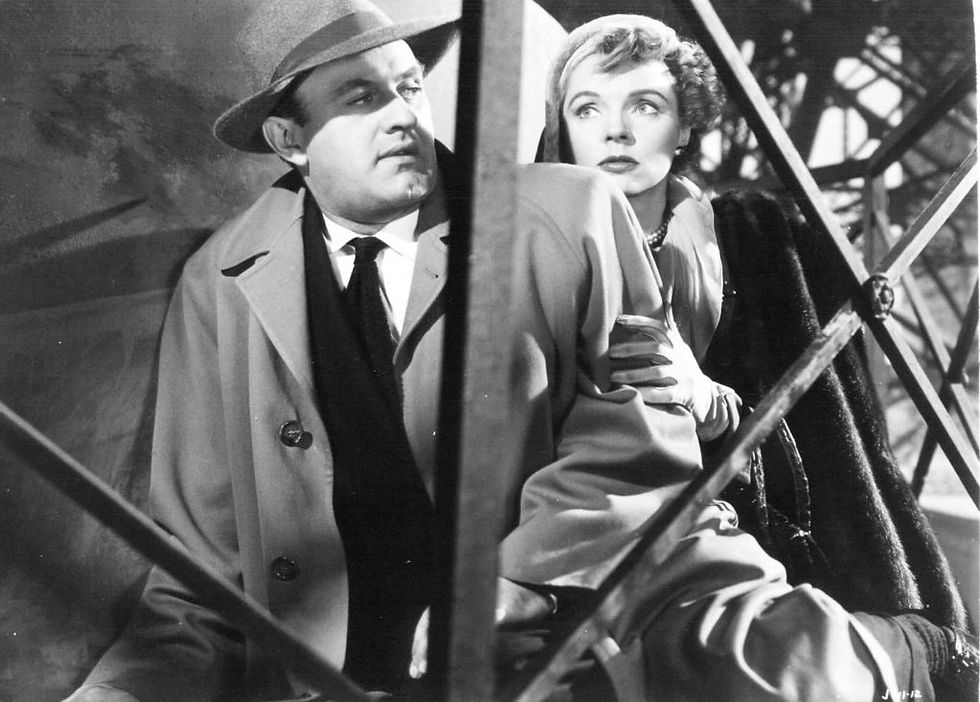
I wonder. Can you go from bad to good easier than from good to bad?
Factoid: Hugh Beaumont was an ordained Methodist clergyman with a master’s degree in theology. He conducted a ministry throughout his acting career.
Your favorite noir star "breaking good"?
If you enjoyed this post, please share with others.


