


THE NOIR GENERATION
Film Noir - Brought To You By "The Greatest Generation”
Our parents and grandparents created the somber, sensuous film tales we still devour.
Journalist Tom Brokaw anointed The Greatest Generation for those who came of age during the Great Depression and World War II. To be more precise and poignant – those who endured the worst economic collapse in American history followed by the costliest war in American history. That combined ordeal consumed fifteen years. Brokaw calls the hearty souls that lived through it “part of historic challenges and achievements of a magnitude the world had never seen before.”
The Greatest Generation is born between 1900 and 1930. The oldest are not yet thirty - the prime of your work and reproductive age - when the world comes crashing down. For the next fifteen years it is life interruptus…when the nightmare ends, you are well into your forties in a life span of perhaps seventy years. The youngest of that generation are born just as the Great Depression begins. You grow up in deprivation and sacrifice.

By 1945 the Depression is over. The War is won. Citizen soldiers come home to a tumultuous welcome, and prosperity beckons. What does everyone, male and female, want to do? Make up for lost time. Back to the future, not forward to a brave new world. The average man marries at twenty-three; his average bride is twenty.
Brokaw paints a picture of simple kids from the farmlands of Nebraska to the tenements of New York returning as mature, disciplined, responsible - and modest. Humble heroes who took pride in personal responsibility. They wanted to catch up overnight, to recoup those Best Years of our Lives - the Oscar winning movie of 1946 that told stories of vets struggling to find normalcy. The citizen soldiers vanquish Rosie the Riveter and embrace Betty Crocker. The yearn to return promotes “traditional” American values – a revival movement begetting a benign and prosperous patriarchy that casts women in a leading role as modern, pampered homemakers. In a hurry to go nowhere fast, a suburban culture is constructed overnight, and the boom begins.
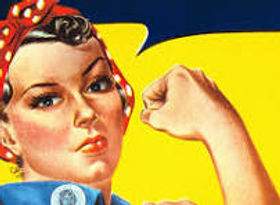
Rosie
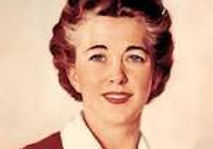
Betty
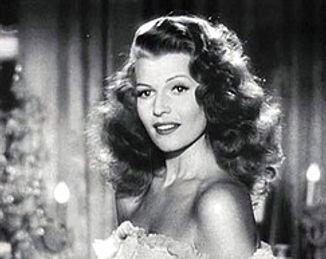
Gilda
But if all is copacetic and unified, why is film noir so popular at the time? That era is never as secure and conformist as it seemed. Bubbles of discontent are forever rising to the surface. Film noir is the most significent and dramatic forum of protest, or at least the most accessible, declaring the American Dream as pie-in-the-sky by tossing the pie in your face.
When all cultural and political hell broke loose in the late-1960s, everyone was shocked, even the shockers. Why was there no warning? How did the world turn upside down overnight? Film noir was the harbinger of that revolution.
There was serious dislocation in the post-war years: the economy takes time to recover; the wounds of war for vets and families are slow to heal, leaving scars on the soul as well as the body; the “existential” threat of Communism and nuclear war darkens the horizon. Noir reflected this grim reality, but went further. It fused the “liberal” critique of power elites, organization men, hidden persuaders, and lonely crowds to give it a human face. Film narratives also revealed foreboding over what would soon be called the “feminine mystique” by crafting femme fatales and strong women. The angst of Arthur Miller and Tennessee Williams and Beat Poets seeped into stories. The film noir genre was scavenging material from the social undercurrents and subconscious fears of the era. Such themes could not be broached, much less explored, on the revolutionary new medium, television.
The same generation that created film noir built the dynamic society it was criticizing - it orchestrated the culture of the times and supplied the workers and managers and parents. For those critical of that era, consider that The Greatest Generation nurtured the baby boomers who revolutionized its values.