Film Noir: Profiles in Courage

Updated: Sep 26
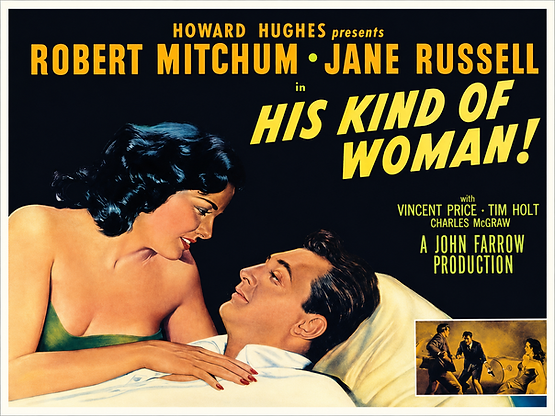
Film noir was never shy about showing off breasts, especially on curvaceous figures like Jane Russell. She became a trailblazer in the mid-1940s, testing the limits of public exposure. Those limits were brief and vague. Section 8, Subsection 4 of the Hayes Code stated: “Nudity can never be permitted as being necessary for the plot. Semi-nudity must not result in undue or indecent exposures.”

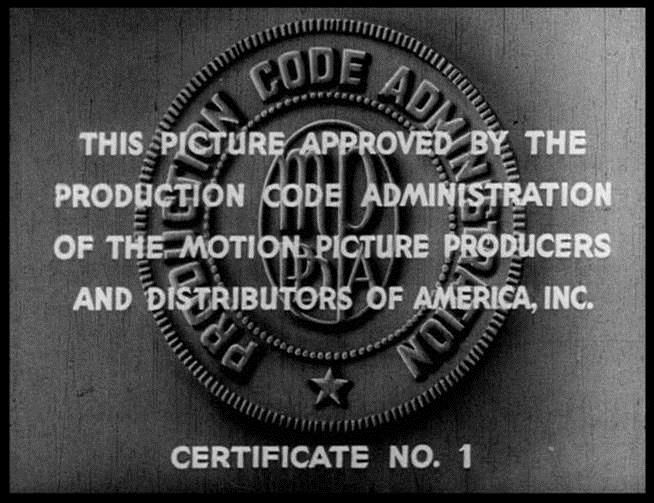
The Hays Code - officially known as "A Code To Govern The Making of Motion and Talking Pictures"- was a detailed twenty-page set of moral guidelines that governed all Hollywood film production from the mid-1930s to the late 1960s. Although officially voluntary and studio-industry run, it was in practice, mandatory - restricting portrayals of sex, crime, violence, religion, and social behavior. Scripts and final versions of all studio films were reviewed and many had parts deleted or rewritten before release.
Writers and directors and censors figured out the Hayes Code on their own by trial and error. They operated on what in 1964 would become known as the “Potter Doctrine” when Supreme Court Justice Potter Stewart, struggling with the meaning of “pornography” during a case, declared: “I can't define it, but I know it when I see it."


In 1941, the Hayes office mailed movie studios and producers a letter that included:
"In recent months we have noticed a marked tendency to inject into motion pictures shots of low-cut dresses which expose women's breasts as well as 'sweater shots'…in direct violation of the Production Code.”
The problem could have been reduced to science by delineating just how many inches were allowed for cleavage, jut, and circumference. Life Magazine, which published the above excerpt, offered this handy guide as to what the motion picture morals police would allow in silver screen sweater sculpture.

The issue grabbed national attention during the making of a Western saga The Outlaw, which could have been subtitled Showdown at Cleavage Canyon. Produced by Howard Hughes, the movie premiered in 1943 but not permitted to expand to national distribution for three more years. The problem was Jane Russell, specifically, too much of her. Hughes entered a protracted legal battle with the Production Code Administration over how the star’s abundant gifts could be depicted and advertised.


Hughes was a pioneer on many fronts. For The Outlaw, the mogul designed a prototype underwire bra to provide Russell with a 5.25-inch cleavage, as much as he dared to expose. During the legal controversy, “cleavage” was first used officially to describe the space or hollow between the breasts.
Over three decades of the Hays Code, thousands of man-hours went into determining the proper depiction of the female form in cinema. And it was literally man-hours. As far as I can tell, not a single woman was involved in this delicate labor.
Final Cut Noir grows by word of mouth. If you enjoy what you read, please pass it along.
Follow Final Cut Noir on Instagram